Scientific confirmation of the successful demonstration of underground hydrogen storage
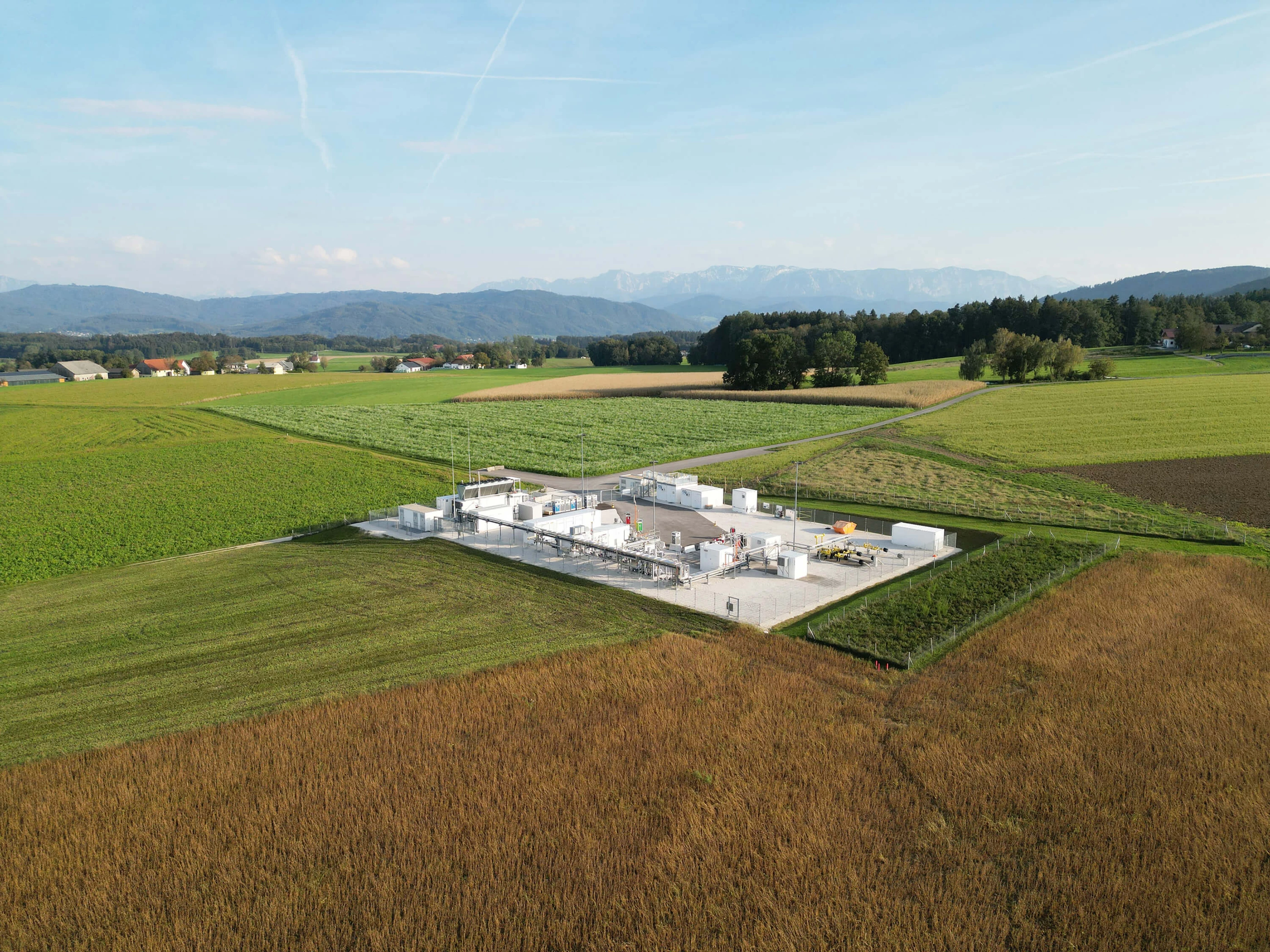
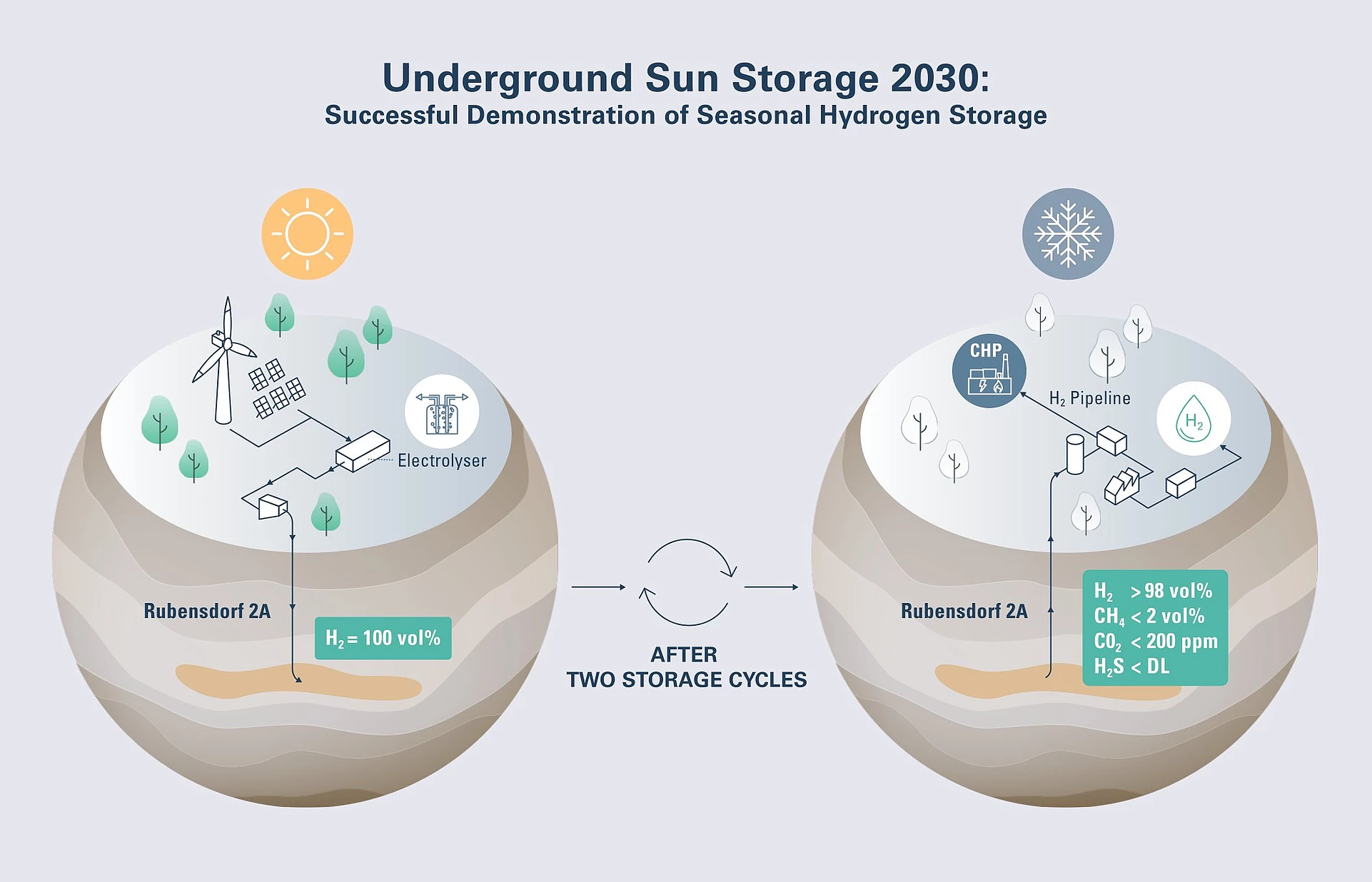
The scientific paper published in the International Journal of Hydrogen Energy documents the results of the Underground Sun Storage 2030 (USS2030) demonstration project and describes the world’s first successful demonstration of the storage of pure hydrogen in an underground natural gas reservoir. It focuses on the technical implementation, operational experience gained from two storage cycles, the quality of the recovered hydrogen, and the safety and integrity aspects of the storage facility. Furthermore, the technical feasibility and operational performance of the technology under real-world operating conditions are assessed. The publication demonstrates that hydrogen can be stored safely, seasonally and on a large scale in porous underground storage facilities, thereby making an important contribution to the future energy supply.
Scientific recognition for a milestone in the energy transition
The results confirm that underground hydrogen storage (UHS) in porous sandstone formations is technically feasible, safe, and suitable for seasonal, large-scale energy storage. As a result, the technology has reached Technology Readiness Level (TRL) 7, marking an important step from research and demonstration towards future commercial deployment.
Building on this achievement, the EU-funded flagship project EUH2STARS is advancing the next stage of technology development and aims to raise the technology to TRL 8. Future work focuses on the continued operation of the Rubensdorf demonstrator and the implementation of a next-generation hydrogen purification system capable of processing the full withdrawal stream. The upgraded facility will demonstrate competitive end-to-end operation over four full storage cycles in a real-world environment. The system combines Hybrid Pressure Swing Adsorption (HPSA) and membrane permeation technologies to produce two standardized energy products: pure hydrogen and pipeline-quality natural gas. These developments are expected to further strengthen the technological and economic viability of large-scale underground hydrogen storage in porous formations and support its integration into Europe’s future energy system.
The publication represents a significant milestone for the hydrogen sector, providing an independently reviewed and citable scientific foundation for the further development of underground hydrogen storage technologies. By creating transparency and confidence in the demonstrated results, it supports future research, investment, and infrastructure development across Europe.
This article was written in collaboration with co-authors from Axiom GmbH and the University of Natural Resources and Life Sciences, Vienna (BOKU).
The projects received financial support from the Austrian Climate and Energy Fund and the Austrian Research Promotion Agency (FFG) for the flagship project USS2030 (www.uss-2030.at, FFG project no. 880764) and by the Clean Hydrogen Partnership and the European Union for the EUH2STARS flagship project (www.euh2stars.eu, grant agreement ID: 101137798). These formed the basis of this publication. Further CAPEX costs were partly funded by Kommunalkredit Public Consulting (KPC application no. C062754).
About the International Journal of Hydrogen Energy
The International Journal of Hydrogen Energy (IJHE) is one of the world’s leading scientific journals in the fields of hydrogen technologies, the hydrogen economy and renewable energy systems. For decades, the journal has been publishing research findings on hydrogen production, storage, transport, infrastructure and applications. Thanks to its high scientific reputation, international reach and rigorous quality standards, a publication in the International Journal of Hydrogen Energy is regarded as one of the most important specialist publications in the hydrogen sector. The publication of the findings from Underground Sun Storage 2030 underscores the international relevance of this research and its significance for the further development of the hydrogen economy.